Goshen · Hotels
Stagecoach Inn
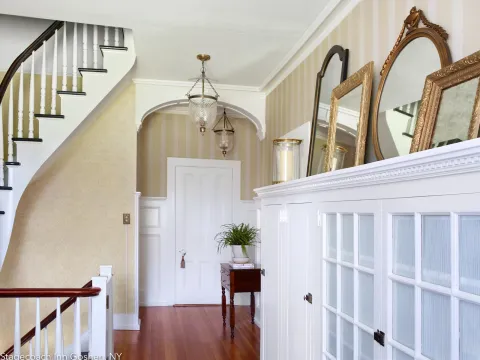
We put this one on the list for the ceilings. The building dates from 1747...

From 1872 to 1963, the Episcopal Sisters of Saint Mary, by some accounts the oldest Episcopal religious community in the United States, lived inside a granite-and-brick convent that architect Henry Martyn Congdon raised on Fort Hill above the Hudson River. Developer Martin Ginsburg spent years restoring the complex before handing it to Hay Creek Hotels, which opened it in June 2020 as a forty-two-room retreat. The exterior chapel and convent walls were kept largely as Congdon built them; inside, two former chapels now serve as function rooms, and the sisters' quiet routine has given way to a spa, a restaurant, and guests who come for the Hudson Valley rather than the liturgy.
What earns The Abbey Inn its place on this list is restraint: a conversion that could have trafficked in gimmick instead kept the building's genuinely rare features, a 1902 bell that still rings for special occasions and a Roosevelt pipe organ built in 1894, as working parts of the hotel rather than museum pieces behind glass. The spa threads into that monastic hush instead of fighting it, and Apropos, the in-house restaurant, is serious enough to draw a dinner crowd that has never booked a room upstairs.
The hotel sits inside Fort Hill Park, sixty-five wooded acres that double as the grounds, and downtown Peekskill's riverfront galleries and restaurants are a short drive or a brisk walk below. Peekskill's own Metro-North station on the Hudson Line puts Grand Central under an hour and a half away, which makes a weekend here one of the few Hudson Valley spa trips that doesn't require a car. It's a different kind of valley town than Rhinebeck or Hudson: smaller, less precious, still finding its footing, and the Abbey gives visitors a reason to be among the first to find it.
Price: €€€ (Premium)
Vibe: Monastic hush, Hudson Valley hilltop, boutique spa
Rooms: 42, several with vaulted ceilings shaped by the original convent roofline
Best For: Spa weekenders out of New York City, history-minded travelers, small group retreats
Our Favorite Thing About the Hotel: The 1902 bell and the 1894 Roosevelt pipe organ, both still used for special occasions
Dining: Apropos, a modern American restaurant and bar set in the former refectory
Amenities: Full-service spa, fitness area, more than 5,000 square feet of event space across two former chapels
Attractions: Fort Hill Park grounds, downtown Peekskill's galleries and riverfront, the Peekskill Metro-North station
The forty-two guest rooms don't follow a single template, because the building they occupy never offered one: ceilings and window lines still trace the convent's original roof, so no two floors feel quite alike. Several rooms come with a copy of a book on Fort Hill's history written by a former city historian, a small touch that fits a hotel more interested in its own past than in minibars. The effect is closer to staying inside a restored institution than a purpose-built inn, which is precisely the point.
The Abbey Inn Spa occupies part of the convent's footprint and leans on the same architecture that defines the rooms: thick walls, tall windows, little ambient noise. Downstairs, Apropos serves modern American cooking from what was once the sisters' refectory, with a bar side that draws locals as readily as houseguests. Between the two, the hotel gives a Hudson Valley weekend an actual anchor beyond sightseeing: a reason to stay in rather than drive on to the next river town.
Peekskill works equally well by car or by train: the Metro-North Hudson Line stops in town, a detail that matters for anyone pairing a spa weekend with a car-free trip from the city. The hotel's event spaces mean weekends can carry a wedding or retreat alongside regular guests, so travelers chasing total quiet are better off asking ahead. This is a hilltop retreat built for slowing down, not a base for nightlife; it rewards guests happy to spend an evening in the spa and dinner at Apropos rather than out exploring.
We put this one on the list for the ceilings. The building dates from 1747...
We chose this one for the staying power of the building itself: a mansion built...
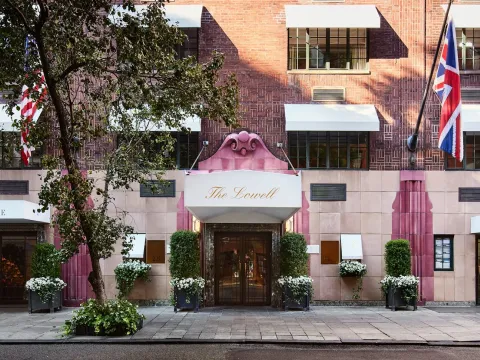
What won us over here is the Lowell’s refusal to read like a hotel at...