Planning a luxury stay in the Miami metropolitan area? Compare Downtown Miami, Brickell, Miami Beach, South Beach, Fort Lauderdale, and West Palm Beach for beach access, nightlife, and family-friendly hotels, plus key booking checks before you reserve.
Is the Miami metropolitan area right for your stay?
Landing over Biscayne Bay at night, the Miami metropolitan area feels less like a single city and more like a chain of distinct worlds stitched together by water and light. For a luxury traveler choosing a hotel in the Miami region, the first decision is not star rating, but which world you want outside your window. City-centre towers in Downtown Miami and Brickell, oceanfront beach hotels along Miami Beach and South Beach, and quieter coastal stretches near Fort Lauderdale and West Palm Beach each deliver a very different stay.
For travelers based in the United States, this region works especially well as a long weekend or extended holiday hub. Distances are manageable – Miami Beach to the heart of Downtown is roughly 10 km (about 15–20 minutes by car outside rush hour, longer in peak traffic) – yet the atmospheres shift dramatically from one neighborhood to the next. If you want a hotel Miami experience that balances culture, dining, and water views, the metropolitan area is a strong choice, provided you match your address to your priorities rather than simply chasing good reviews or the lowest nightly rate.
Luxury and premium hotels in the broader Miami metropolitan area tend to specialize. Some lean into resort-style beach access and pool scenes, others into discreet business services and skyline night views. The best strategy is to decide whether you are here primarily for the beach, the city, or easy access to other South Florida hubs such as Fort Lauderdale and West Palm Beach, then narrow down hotels Miami options within that specific area. Once you have a short list, compare concrete details such as typical nightly rates for entry-level rooms (often from around US$250–450 in shoulder seasons at upscale properties), upgrade costs for suites, and whether resort fees include beach chairs or only pool access.
Downtown Miami and Brickell: urban energy and bay views
Glass towers along Biscayne Boulevard define the urban core, with high-rise hotels stacked between office buildings, residential towers, and the water. Staying here suits travelers who want a city-centre feel within the Miami context: walkable to the Kaseya Center, the Adrienne Arsht Center, and the developing waterfront promenade along Biscayne Bay. Many premium properties cluster within a few blocks of 255 Biscayne Boulevard Way and 270 Biscayne Boulevard Way, an area that has become a de facto luxury hotel corridor with brands such as JW Marriott Marquis Miami, Kimpton EPIC, and InterContinental Miami.
Expect polished lobbies, serious meeting spaces, and rooms designed for both business and leisure stays. Floor-to-ceiling windows are common, and the better properties make the most of them with sweeping bay panoramas and a dramatic night view of the port cranes and cruise ships. Typical room categories range from standard king rooms of around 30–35 m² to club-level floors and one-bedroom suites with separate living areas. This is where a hotel Miami stay feels most like a contemporary city break, with Latin American banking energy by day and rooftop cocktails by night in spots such as EAST Miami’s Sugar bar or Brickell’s terrace lounges.
The trade-off is obvious. You gain quick access to Miami International Airport (usually 15–20 minutes by car in light traffic, but allow extra time at rush hour), the Brightline station for runs toward Fort Lauderdale and West Palm (around 35 minutes to Fort Lauderdale and roughly 75 minutes to West Palm Beach, depending on service), and cultural venues, but you lose the immediate beach access of Miami Beach hotels. For many travelers, the solution is to treat Downtown or Brickell as a base, then use short rides to reach South Beach or Key Biscayne for daytime swims, returning to the metropolitan calm of the city once the beach crowds peak. A simple sample day: morning meetings in Brickell, a late-afternoon Uber to South Beach for a swim and dinner, then back to a quiet high-rise room with a bay-facing night view.
Miami Beach and South Beach: classic shoreline glamour
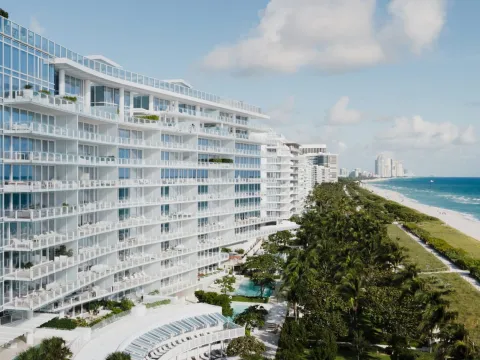
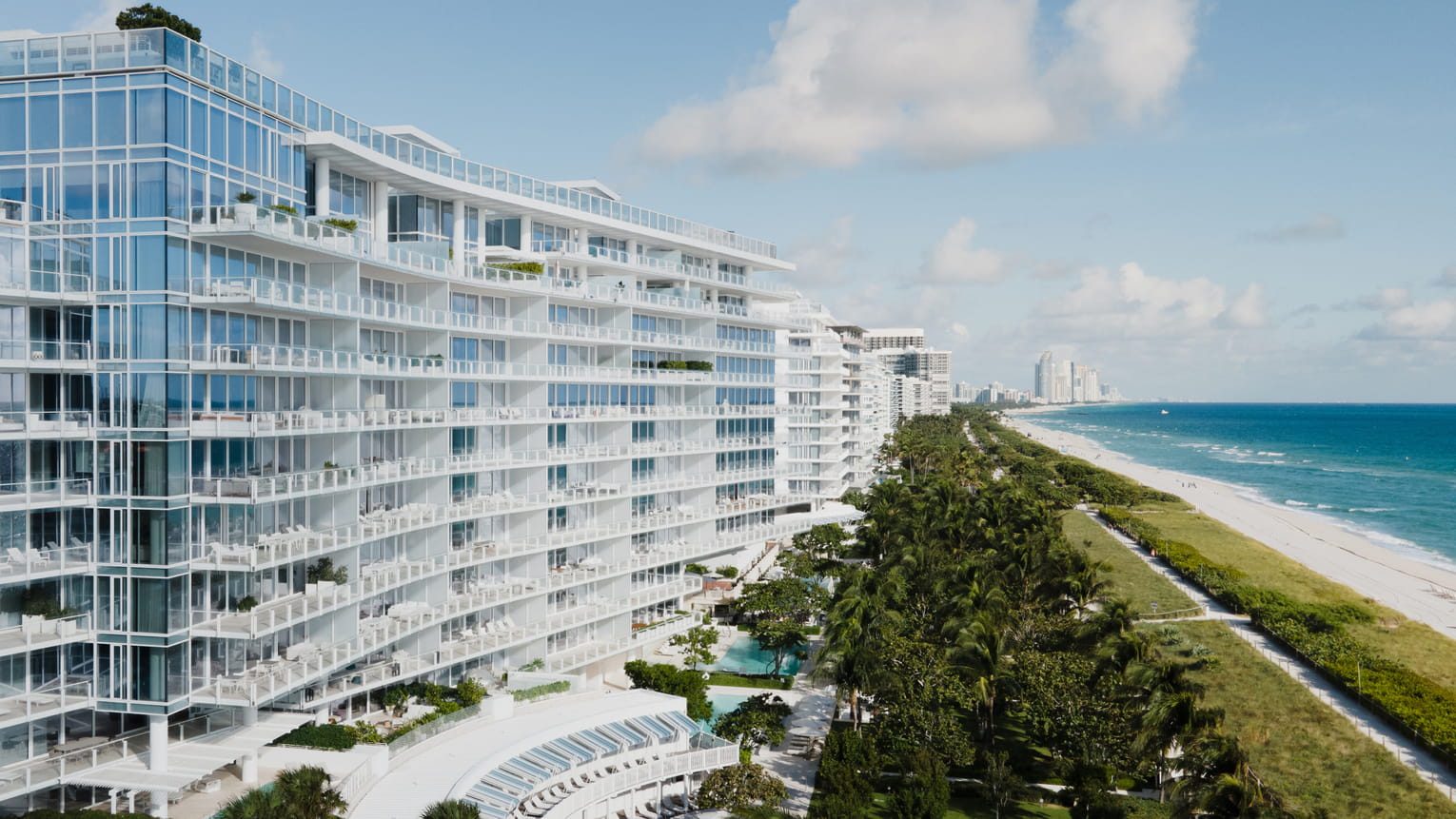
Collins Avenue, especially north of 23rd Street, concentrates some of the most recognizable beach hotels in the United States. Here, the Miami metropolitan coastline becomes a continuous ribbon of sand, with oceanfront properties offering direct access to the beach and long, landscaped pool decks. Flagship resorts such as Fontainebleau Miami Beach, The Miami Beach EDITION, and 1 Hotel South Beach anchor this stretch, combining multiple pools, on-site restaurants, and spa facilities. A stay in this area is about waking to the Atlantic, walking the boardwalk at sunrise, and drifting between cabana, spa, and restaurant without ever crossing a major road.
South Beach, centered roughly around Ocean Drive and Lincoln Road, delivers a different rhythm. The hotels here tend to be more compact, with a stronger emphasis on nightlife, design, and people-watching. You trade the quieter resort feel of mid-beach for proximity to bars, galleries, and late-night dining, plus the iconic pastel streets that many travelers associate with Miami Beach imagery. Boutique properties such as The Betsy, The Setai, and smaller art deco inns line Collins Avenue and Ocean Drive, often with smaller room footprints but high design. For some, that buzz is the point; for others, it can feel relentless after a few nights.
Choosing between Miami Beach and South Beach is less about star ratings and more about your tolerance for intensity. If you want a beach hotel where you can sleep with the balcony door open and hear mostly waves, look north along Collins or toward the more residential stretches near 44th Street, where resort-style properties typically offer larger pools and quieter evenings. If you want to step out of your inn-style property and be in the middle of the action within seconds, South Beach is the better fit, accepting that serenity is not its primary promise. As a rough guide, entry-level rooms in well-known oceanfront hotels often start higher than comparable city rooms, with a premium for full ocean view categories and suites that add separate living rooms or oversized terraces; this is especially true for peak dates and popular family holidays.
Fort Lauderdale and West Palm Beach: quieter coastal alternatives
Drive roughly 40 km north and the skyline softens. Fort Lauderdale and its beachfront neighborhoods offer a more measured version of South Florida, with hotels facing a broad promenade along A1A and the Intracoastal Waterway just a few blocks inland. For travelers who find Miami Beach too dense, this part of the metropolitan area can be a good alternative, especially for longer stays where you want space, light, and easier driving. From central Miami, the trip to Fort Lauderdale typically takes 35–45 minutes by car or around the same by Brightline train from Downtown, though both options can run longer in heavy traffic or at peak travel times.
Lauderdale Beach hotels often emphasize water access in two directions: the ocean out front and the canal network behind. Many premium properties here feel almost resort-residential, with generous balconies and a slower pace that suits families or couples who plan to spend more time on property. Examples include Conrad Fort Lauderdale Beach, The Ritz-Carlton, Fort Lauderdale, and smaller condo-style hotels with kitchenettes. You still have a city at your back – Fort Lauderdale’s restaurants and cultural venues – but the overall mood is calmer than the core Miami metropolitan districts, and parking and driving are generally less stressful.
Continue north toward West Palm Beach and Palm Beach and the tone shifts again. Here, the luxury narrative leans more toward manicured avenues, historic estates, and a compact city centre with galleries and dining. Properties such as The Breakers Palm Beach, Eau Palm Beach Resort & Spa, and city hotels near Clematis Street illustrate the range, from grand oceanfront resorts to walkable downtown bases. A stay in West Palm or Palm Beach works well if you are combining Miami time with golf, shopping, or visits to friends along the coast. The trade-off is distance: you gain tranquility and a different social scene, but you are no longer a quick ride from South Beach or Downtown Miami nightlife, and the drive back to central Miami can take 75–90 minutes depending on traffic and time of day.
How to choose the right neighborhood for your trip
Standing on Brickell Avenue at rush hour, watching commuters stream past the bay, you quickly understand that “hotel Miami metropolitan area” is not a single decision. It is a choice between several micro-destinations, each with its own rhythm. For a first visit focused on iconic images – pastel lifeguard stands, palm-lined sand, neon at night – South Beach or central Miami Beach remain the most direct answer, especially if you value walking access over driving. A simple first-timer itinerary might be three nights in South Beach for beach time and nightlife, followed by two nights in Brickell for museums, shopping, and a day trip to Wynwood or Little Havana.
Travelers with meetings or events in the city centre will be better served by Downtown Miami or Brickell, where premium hotels are built around business needs but still offer leisure-friendly amenities. Here, good reviews often highlight service consistency, efficient check-in, and strong concierge teams rather than beach access. If your schedule includes day trips to Fort Lauderdale, West Palm, or even the Keys, this central position within the metropolitan area simplifies logistics. You can reach Miami International Airport, the cruise terminals, and the Brightline station in short order, then return to a base with reliable Wi‑Fi, quiet lounges, and late-night room service.
For repeat visitors from other states in the United States, the calculus often changes. Many shift toward Fort Lauderdale beach or Palm Beach once the novelty of South Beach fades, prioritizing space, quieter streets, and easier parking. Others experiment with holiday rentals in residential pockets, using a luxury hotel for the first nights to reset after travel, then moving to an apartment-style stay. The key is to be honest about how much nightlife, driving, and urban intensity you actually want around you, and to sketch a rough daily plan – beach first, then city, or the reverse – before you lock in a non-refundable rate or commit to a specific neighborhood.
What to verify before booking a luxury stay
Room categories in the Miami metropolitan region can vary dramatically within the same property, so the first thing to verify is the exact view and layout you are booking. A “city view” room in Downtown might offer a spectacular night view over Biscayne Bay, or it might face an office tower a few meters away. On Miami Beach, “partial ocean view” can mean anything from a sliver of blue between buildings to a generous angled terrace; the difference matters if you plan to spend real time in the room. When comparing options, note the square meterage, balcony size, and whether higher floors carry a clear price premium.
Location descriptions also deserve a close read. Some hotels describe themselves as “Miami Beach” while actually sitting on the bay side of the island, which changes your daily relationship to the sand. Others in the broader metropolitan area use “Fort Lauderdale” or “Palm Beach” in their branding while being several kilometers from the most walkable beachfront or city-centre zones. For a premium stay, it is worth cross-checking the address on a map and noting the exact distance to the beach or main dining streets. A simple checklist: confirm walking time to the sand, driving time to the airport, proximity to a Brightline or Metrorail station, and whether valet parking is the only option.
Finally, look beyond star ratings and generic good reviews to understand the property’s core personality. Some luxury hotels in South Beach lean heavily into nightlife, with pool music and lobby bars that stay active late; others in Lauderdale Beach or West Palm focus on spa, wellness, or golf. If you value a quiet morning coffee more than a DJ by the pool, prioritize properties whose descriptions and guest feedback emphasize calm, service, and what could reasonably be called excellent reviews for staff attention rather than party atmosphere. Reading a few recent comments about noise levels, housekeeping, and beach chair availability will usually tell you more than a single overall score, and can help you narrow down the best family hotels Miami Beach or the most business-friendly options for your specific dates.
Who the Miami metropolitan area suits best
Frequent travelers from across the United States often treat the Miami metropolitan region as a flexible canvas. It works exceptionally well for couples who want a mix of beach and city, alternating days between South Beach and evenings in Downtown restaurants. It also suits solo travelers who appreciate the safety and structure of full-service hotels, with staff accustomed to international guests and complex itineraries. Many high-end properties offer 24-hour front desks, secure keycard elevators, and concierge teams who can coordinate transfers, restaurant reservations, and late check-outs.
Families tend to gravitate toward mid-beach Miami Beach, Fort Lauderdale beach, or the calmer stretches near Palm Beach, where sidewalks are wider and the pace is slower. Here, a beach hotel with direct sand access simplifies logistics, and the surrounding area usually offers parks, casual dining, and less late-night noise. Multi-generational groups sometimes split the difference, choosing a central Miami hotel for a few nights of city energy, then moving north to West Palm or south to quieter coastal pockets for the rest of the stay. In these cases, adjoining rooms, suites with kitchenettes, and guaranteed bedding configurations (such as two queen beds instead of one king) become more important than rooftop bars.
Where the Miami metropolitan area is less ideal is for travelers seeking a secluded, nature-first escape. While there are day trips to the Everglades and quieter keys, the core identity of this region is urban-coastal: towers, causeways, and long, animated beaches. If you embrace that – the mix of Latin American influences, United States city infrastructure, and Atlantic shoreline – the right hotel choice here can feel not just good, but precisely calibrated to the way you like to travel. If you prefer silence, dark skies, and wilderness outside your window, you may be happier limiting your time in the metropolitan core and focusing on side trips instead, using Miami primarily as a transport hub.
Is the Miami metropolitan area a good choice for a first-time visitor?
Yes, the Miami metropolitan area is an excellent choice for a first-time visitor who wants a combination of beach, city, and nightlife in one trip. Staying in Miami Beach or South Beach delivers the classic shoreline experience, while a hotel in Downtown Miami or Brickell adds easy access to cultural venues and transport links to Fort Lauderdale and West Palm Beach. The key is to choose a neighborhood that matches your priorities rather than focusing only on star ratings. A practical approach is to map your must-see spots, estimate travel times between them, and then pick a base that minimizes daily backtracking and unnecessary taxi or rideshare costs.
What is the best area to stay in for beach access?
For direct beach access, Miami Beach and South Beach remain the strongest options, with many hotels located directly on the sand or just across the boardwalk. Mid-beach, especially along Collins Avenue north of 23rd Street, offers a slightly calmer atmosphere with resort-style properties, while South Beach places you closer to nightlife and dining. Fort Lauderdale beach and Palm Beach also provide excellent beachfront stays if you prefer a quieter coastal environment. In all of these areas, confirm whether your nightly rate includes sun loungers and umbrellas on the sand or only poolside seating, as this can significantly affect the overall value of your stay.
How does staying in Downtown Miami compare to Miami Beach?
Downtown Miami and Brickell feel like a modern city centre, with high-rise hotels, business services, and bay views, making them ideal for travelers with meetings or those who value quick access to transport. Miami Beach, by contrast, is built around the ocean, with beach hotels emphasizing pools, sand, and a resort atmosphere. If you want culture, dining variety, and easier day trips around the metropolitan area, Downtown works well; if your priority is swimming and sunbathing, Miami Beach is the better base. Many visitors split their time between the two, starting with a few nights in the city for museums and sports events, then finishing the trip with a beachfront stay to unwind before flying home.
Are there quieter alternatives to South Beach within the Miami metropolitan area?
Yes, several areas offer a calmer experience than South Beach while remaining within the broader Miami metropolitan region. Mid-beach Miami Beach, Fort Lauderdale beach, and the coastal zones near Palm Beach and West Palm Beach all provide more relaxed atmospheres, with wider promenades and fewer late-night crowds. These locations suit families, longer stays, and travelers who prefer early mornings on the sand to nightlife. When researching, look for phrases such as “family-friendly,” “residential feel,” or “spa-focused” in hotel descriptions and guest reviews to identify quieter properties and the best family hotels Miami Beach or Fort Lauderdale can offer for your travel dates.
What should I check before booking a luxury hotel in the Miami area?
Before booking, verify the exact room category, view, and layout, as these can vary widely within the same property. Confirm the hotel’s precise location and distance to the beach or city-centre attractions, since some addresses marketed as Miami Beach, Fort Lauderdale, or Palm Beach are several kilometers from the most walkable zones. Finally, read beyond star ratings to understand whether the property emphasizes nightlife, wellness, business services, or family-friendly amenities, and choose according to your travel style. A quick pre-booking checklist: map the address, check recent comments about noise and service, compare resort fees, and confirm cancellation terms in case your plans shift or you decide to adjust neighborhoods within the Miami metropolitan area.