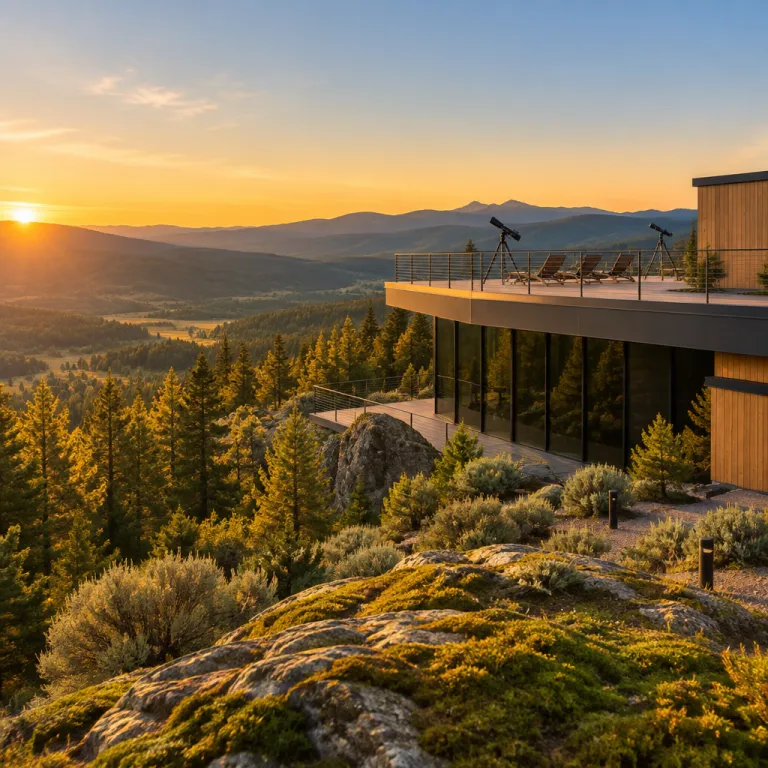
Why darkness is the new status symbol in American hospitality
Luxury used to mean a skyline view; now it often means a sky so black you can see the Milky Way with the naked eye. As light pollution spreads across the United States, the rare hotels that can offer a truly dark sky have turned the night itself into their most coveted amenity. For high-end guests who once chased rooftop bars and neon, the quiet power of a pristine night sky has become the ultimate flex.
Astrotourism hotels in the United States sit at the intersection of wilderness protection and elevated service, using strict low-light policies to frame the stars as carefully as they frame the wine list. Many work with lighting designers, astronomers and groups like DarkSky International (formerly the International Dark-Sky Association) to shield every path lamp, dim every façade and keep the skies above the lodge as untouched as possible. DarkSky’s certification programs for International Dark Sky Parks, Communities and Reserves have become a kind of shorthand for serious night-sky protection. The result is a stay where the best moments happen after dark, when the night sky feels big enough to reset your sense of scale.
Demand is not theoretical; a 2023 Booking.com survey of roughly 27,000 travelers across 33 countries found that about 62 percent were interested in traveling for stargazing and celestial events, and Forbes has profiled dozens of hotels building programming around dark skies. That surge has pushed more luxury resorts near each national park with an International Dark Sky Park designation to rethink how they manage light, from Death Valley to Big Bend and beyond. For travelers, the shift means you now need to book with the same scrutiny you would apply to a Michelin dinner, asking how the hotel protects its dark skies before you commit to a stay.
How astrotourism programming turns a night sky into an itinerary
At serious astrotourism hotels, stargazing is not a casual suggestion but a fully designed experience that anchors the entire resort rhythm. Properties in broad valley landscapes or near dune systems often build small observatories just beyond the main lodge, where resident astronomers lead a stargazing tour before most guests would usually think about dessert. The best places treat the night as a multi-course journey, moving you from naked-eye constellation spotting to telescope views of distant stars and planets.
In the desert Southwest, a resort spa might pair a twilight soak with guided stargazing experiences, then send you back to a casita where the bed faces a floor-to-ceiling window framing the night sky. At Amangiri in southern Utah, for example, staff set up telescopes on sandstone terraces and time sessions around meteor showers, while Under Canvas Lake Powell–Grand Staircase offers scheduled dark-sky talks and telescope viewing on clear nights. Mountain lodges in the northern United States lean into year-round programming, offering winter sky walks on snow-packed trails and autumn astronomy hikes that echo the ranch-style retreats highlighted in this guide to Montana’s great lodges in fall. In both cases, the resort team treats the sky like a private park, with scheduled activities, expert interpretation and a clear sense of narrative.
Some of the most compelling astrotourism hotels in the United States sit just outside national park boundaries, where regulations are strict but design freedom is greater. Near Death Valley National Park, for example, The Inn at Death Valley can offer a guided stargazing tour across nearby sand dunes, then return guests to a quiet bar lit only by candles and low-light lanterns. In Texas, properties near Big Bend National Park and its dark-sky protections build decks that face the river and the mountains, turning every clear night into a front-row seat on the cosmos. At Chaco Culture National Historical Park’s gateway lodges in New Mexico, visiting astronomers often describe the Milky Way as “bright enough to cast a shadow,” a phrase echoed in park night-sky programs and outreach materials that has become a kind of unofficial slogan for the dark-sky movement.
The wellness of looking up: why cosmic calm sells
Astrotourism has moved beyond amateur astronomy because luxury travelers are not chasing data, they are chasing perspective. When a resort turns off its exterior lights and invites guests to lie back on warm dunes or a cool deck, the effect is closer to a meditation session than a science class. Under truly dark skies, the night feels big enough to hold whatever you brought with you, from work stress to heartbreak.
Resort spa directors have noticed that guests emerge from a night sky session with the same softened shoulders they see after a long massage, which is why many hotels now pair stargazing experiences with breath work or sound baths. At Under Canvas locations near national parks, for instance, staff routinely report that guests fall asleep faster after late-night sky programs. In New England, where foliage trips already draw travelers, some high-end lodges are quietly adding dark sky walks to their autumn programming, encouraging guests who come for leaves to stay for the stars; this mirrors the way properties position themselves in guides to New England’s best foliage weeks. The message is simple but powerful: your stay is not just about where you sleep, it is about how the sky above you makes you feel.
Out West, where the great sand landscapes and wide valley vistas already command attention, the wellness angle of astrotourism is even stronger. A lodge near Great Sand Dunes National Park and Preserve or a certified dark-sky reserve can offer yoga at sunrise and a stargazing tour at night, framing the full arc of the day as a reset. For solo travelers especially, the combination of silence, low light and endless stars can feel like a rare kind of privacy that no spa menu can replicate.
Where darkness still lives: American landscapes built for stars
True dark skies are not evenly distributed across the United States; they cluster where population thins and horizons open. The desert Southwest remains the spiritual home of astrotourism hotels, with Death Valley, Big Bend and the great sand dune regions offering some of the darkest night sky readings on the continent. On the Bortle Dark-Sky Scale, which ranks night-sky brightness from 1 (pristine) to 9 (inner city), parts of these regions still reach Class 1 or 2. Around each national park, a handful of lodges and resorts have learned that the best marketing image is not a pool but a sky so dense with stars it looks almost textured.
Death Valley National Park, with its International Dark Sky Park designation, has become a proving ground for how luxury and darkness can coexist without compromise. Here, a resort might sit near sand dunes that glow silver under starlight, yet keep its own footprint small and its light pollution almost nonexistent through careful shielding and strict curfews. One park astronomer notes in public talks that “on moonless nights, the Milky Way is bright enough that first-time visitors think there is a cloud overhead.” Guests book these stays not for a big scene but for the quiet thrill of walking out from the lodge into a night so dark that the Milky Way casts a faint shadow on the ground.
Farther east, Big Bend National Park in Texas and the surrounding dark-sky preserves offer a different flavor of darkness, with rugged canyons and a river valley framing the horizon. Properties here often lean into a ranch lodge aesthetic, echoing the old grandeur explored in this look at American hotels still running on historic glamour, but with a modern commitment to low-light design. In the high plains and mountain West, from Colorado’s Great Sand Dunes region to remote valleys in Montana and Wyoming, the best places for astrotourism stays are those that treat the sky as their primary natural resource and use light pollution maps to prove it.
How to book for real darkness, not marketing copy
Booking astrotourism hotels in the United States requires a different checklist than reserving a city resort. Before you book, look for proximity to a national park or a certified International Dark Sky Park or Reserve, then cross-check satellite maps that show light pollution levels around the property. Tools like the Light Pollution Map or DarkSky’s finder can reveal whether a hotel sits in a genuinely dark zone or on the edge of a growing glow. A hotel that sits near a dark-sky designation but glows like a stadium at night will never deliver the night sky you are paying for.
Serious dark sky resorts will describe their lighting strategy in detail, from shielded path lights to in-room blackout shades that let guests sleep under truly dark skies. Many of the best places publish suggested dates for peak night sky viewing, often steering travelers toward autumn and winter when the air is drier and the nights are longer. You should also check moon phase calendars, because even the most remote valley landscape will feel less dramatic under a full moon that washes out the stars.
When evaluating options, ask whether the lodge offers guided stargazing experiences, a resident astronomer or a structured stargazing tour, not just a casual mention of stars on the website. Properties near Death Valley National Park, Big Bend National Park or dune areas like Great Sand Dunes often highlight year-round programming, but you should confirm that low-light policies remain strict even during peak holiday periods. In a market where every resort claims a view, the true luxury is the hotel that turns off its lights and lets the night sky do the talking.
FAQ
What makes a hotel truly suitable for astrotourism stays?
A hotel suited to astrotourism needs more than a rural ZIP code; it needs consistently dark skies and a serious approach to lighting. Look for properties near a national park or an International Dark Sky Park or Reserve, with documented low-light policies and minimal light pollution from nearby towns. The best hotels also offer guided stargazing experiences, telescopes and staff who can interpret the night sky for guests.
Are autumn and winter really better for dark sky travel?
Cooler seasons are usually better for astrotourism because the air is drier and clearer, which sharpens views of distant stars. Nights are longer in autumn and winter, giving you more hours of darkness and flexibility around clouds or evening plans. In many desert and valley regions, temperatures are also more comfortable for late-night stargazing tours during these months.
How can I avoid disappointment when I book a dark sky resort?
To avoid disappointment, verify claims instead of trusting marketing language about stars and skies. Check maps that show light pollution, confirm the hotel’s distance from major towns and ask directly about lighting policies and any International Dark Sky designations nearby. Reading recent guest reviews that mention the night sky can also reveal whether the resort truly turns off its lights or keeps the property bright all night.
Do I need special equipment for a luxury stargazing stay?
Most astrotourism hotels provide quality telescopes and binoculars, so you rarely need to bring your own gear. What matters more is appropriate clothing for cool night temperatures and a willingness to let your eyes adjust to the dark for at least twenty minutes. If you are serious about photography, a camera with manual settings and a tripod can help you capture the night sky without relying on the resort’s equipment.
Can dark sky hotels offer year round stargazing experiences?
Many dark sky resorts in the United States operate year round, but the character of the night sky changes with the seasons. Desert properties near Death Valley or dune landscapes may be more comfortable in cooler months, while mountain lodges offer crisp winter skies that reward warm layers. When you book, ask the hotel which constellations or celestial events are visible during your chosen dates, so you can match your stay to the kind of night sky you want to see.