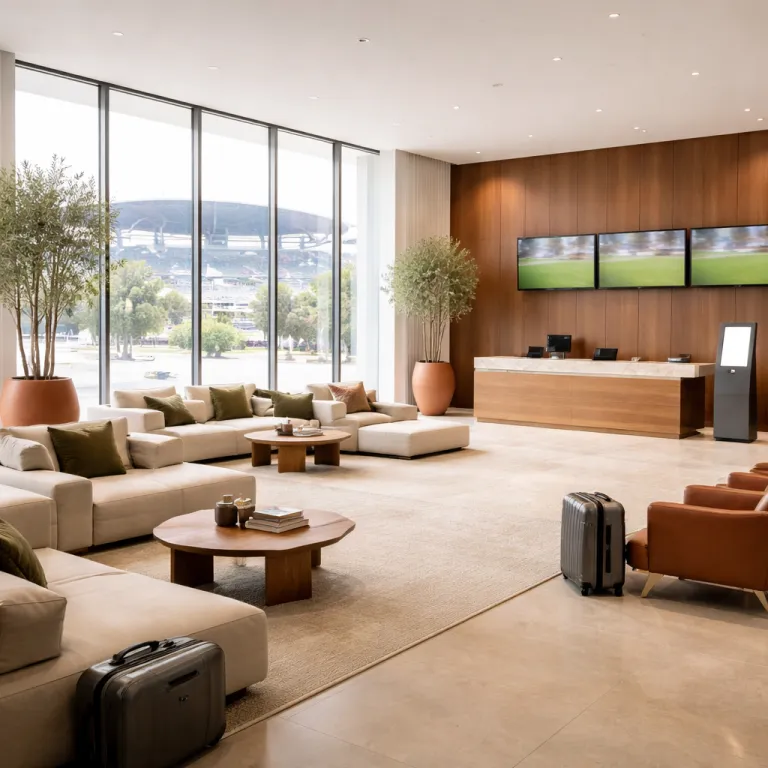
Luxury leverage in host cities as forecasts miss the goal
Across the world of American hospitality, the World Cup was supposed to be a once-in-a-generation compression event for every luxury hotel in the host cities. Instead, American Hotel & Lodging Association (AHLA) survey data from its 2024 mega-events outlook now suggests that roughly 80 percent of properties in these markets report bookings below internal forecasts, turning what was billed as a guaranteed sellout into a buyer’s market for premium stays in the United States. For travelers searching for World Cup 2026 hotels in US host cities, this means that a carefully chosen hotel in almost any venue city will often trade rate for the right guest, especially for longer stays that bridge the key June and June–July match weeks.
The mechanics of the paradox start with FIFA room blocks that looked rational on paper but distorted demand in practice for every participating stadium and city. FIFA and its accommodation partners pre-reserved thousands of rooms across luxury hotels and more modest properties, then released or cancelled many of those blocks in March 2024, creating what revenue managers now call an artificial early demand signal that pushed rates up just as serious guests were trying to plan their stay. In AHLA’s 2024 mega-events briefing, based on member surveys across dozens of major US markets, analysts note that “factors include visa barriers, high costs, and competition from short-term rentals such as Airbnb,” a combination that has kept actual pick-up well below the initial projections many hotel teams built into their budgets.
That cancellation wave hit hardest in cities where the stadium is not ringed by dense residential neighborhoods, leaving hotels near each venue scrambling to rebuild demand before the first match kicks off. In Kansas City, where the “stadium world” narrative once promised a regional boom, executives now quietly cite internal pacing reports showing bookings running roughly 85 to 90 percent below early expectations and note that even top-tier guest rooms remain available for key match dates. By contrast, Miami and Atlanta, anchored by Hard Rock Stadium and Mercedes-Benz Stadium, are running roughly half again ahead of normal pace as leisure travelers fold World Cup matches into longer beach or cultural itineraries and treat the tournament as an add-on rather than the sole reason for the trip.
For the luxury traveler, this gap between hype and reality is pure leverage in cities like San Jose, Santa Clara, Seattle, Boston, and Philadelphia, where hoteliers expected a FIFA windfall that has not fully materialized. In Seattle, properties around Lumen Field quietly report what one general manager describes as “a non-event so far,” with suites and connecting rooms still open for June and June–July match windows that were once forecast to sell out a year in advance. In the Bay Area, the Levi’s Stadium corridor from Santa Clara up through San Jose shows similar softness, even as new openings and refreshed guest rooms compete aggressively on service, spa access, and fitness center quality to win the smaller pool of high-value guests who are still finalizing their World Cup 2026 travel plans.
New luxury openings timed to the tournament are feeling this pressure most acutely, particularly in Los Angeles and Dallas where developers built entire narratives around the World Cup. Around SoFi Stadium in Inglewood, several premium hotels that expected to ride pure FIFA demand now find themselves offering expanded options such as chauffeured stadium access, late checkout on match days, and guaranteed restaurant reservations to entice travelers who can afford to be choosy. In Dallas, where AT&T Stadium sits within a wider metroplex rather than a tight downtown grid, high-end hotels from Uptown to the Arts District are quietly negotiating on suites and premium rooms for guests willing to commit to multi-night stays that span more than one match and combine business, leisure, and football.
Even legacy properties that usually ignore event-driven discounting are adapting, especially in Northeastern host cities anchored by MetLife Stadium. New York and New Jersey hotels that once assumed automatic compression now face a more nuanced reality, where international demand is constrained by visa friction and geopolitical caution while domestic travelers weigh whether a single match justifies a full city break. For readers of myusastay.com, the practical implication is clear: in many of these markets, the most effective World Cup 2026 hotel strategy is to approach top-tier properties directly, ask about value-added inclusions rather than headline rate cuts, and use the quieter booking pace to secure better room categories, lounge access, or guaranteed late checkout. As one New York–area revenue director puts it, “We are protecting our brand rates, but we are absolutely open to enhancing the stay for guests who engage with us early and stay through multiple match days.”
Where the hype fizzled: city by city opportunities for premium stays
Not every host city is reacting the same way to this World Cup demand shock, and that matters for travelers deciding where to stay and when to lock in a hotel. Kansas City is the most extreme example, with AHLA member surveys and local hotel association pacing data indicating that properties there are 85 to 90 percent below initial internal expectations, turning what was once marketed as a “stadium world” bonanza into a landscape of underused guest rooms and unusually flexible cancellation policies. For a traveler focused on comfort, that means you can target larger rooms, suites, and club-level floors near the city center and still expect competitive pricing even as the first match approaches in June.
To make the contrasts easier to scan, the following snapshot summarizes how major US host cities are performing and where the best opportunities for luxury stays are emerging:
Kansas City: Bookings reportedly 85–90% below early internal forecasts; upscale hotels near the Power & Light District and Country Club Plaza are keeping minimum-stay rules loose and offering more generous upgrade paths for guests who commit to several nights around match days.
Los Angeles: SoFi Stadium is driving concentrated demand in Inglewood, yet luxury properties in Santa Monica and Beverly Hills are seeing softer than expected World Cup–related bookings. A traveler searching for 2026 hosting hotels in the United States can now treat a stay in Santa Monica as a beach-first, football-second itinerary, using private transfers or rideshare to reach the stadium while enjoying oceanfront guest rooms that might otherwise be priced out of reach during a global event.
San Francisco Bay Area & Seattle: San Francisco and Seattle, both described by local hoteliers as near non-events for the tournament, are even more favorable, with properties around Levi’s Stadium and Lumen Field layering in spa credits, car service to the stadium, and guaranteed restaurant access to tempt high-spending guests. One Seattle-area manager notes that “our World Cup pattern looks closer to a busy convention than a once-in-a-lifetime sellout,” a dynamic that keeps suites and club floors within reach for travelers who book directly.
Miami & Atlanta: Miami is the outlier, running roughly 55 percent ahead of normal pace according to internal booking benchmarks as the city leans into its role as both a host city and a standalone leisure destination. Here, the World Cup effect amplifies existing demand rather than creating it, so travelers should expect less rate flexibility at oceanfront hotels but more creative options inland, where properties pair strong fitness center offerings with shuttle service to both the beach and the stadium. Atlanta, powered by Mercedes-Benz Stadium and its global brand halo, shows a similar pattern, with downtown hotels near the convention center and arena complex filling faster than suburban options that still have premium rooms and suites available for June–July stays.
New York–New Jersey corridor: In the Northeast corridor, the MetLife Stadium catchment area stretches across multiple states, diluting the compression that many analysts once assumed would define this World Cup. Luxury hotels in Manhattan, Jersey City, and even Brooklyn now report healthy but not overwhelming demand, which translates into a rare window where elite status, corporate rates, and even direct negotiation can move the needle on room category and inclusions. For travelers who value service over proximity, this is the moment to prioritize properties known for disciplined hospitality — the same mindset that underpins the detailed operational standards explored in our feature on what European-style service really means in an American opening.
Domestic vs. international demand: Internationally connected cities like Miami, Los Angeles, and Dallas also face a second layer of complexity as visa constraints and geopolitical concerns cap inbound demand that FIFA and local tourism boards once assumed would flood every available room. That gap is being filled in part by domestic travelers who combine business and leisure, extending trips to include a match or two while still prioritizing reliable Wi‑Fi, quiet guest rooms, and well-equipped fitness center spaces. For this executive traveler, the World Cup 2026 hotel landscape now looks less like a scramble for any available bed and more like a curated menu of options where service culture, room design, and stadium access can be weighed calmly against rate.
Outside the United States, Mexico City illustrates how different regulatory and pricing environments can shift the balance between hotels and short-term rentals during a mega-event. While this article focuses on American host cities, many U.S.-based travelers will route through Mexico City or combine matches there with games in Miami or Dallas, making it essential to compare hotel offerings, Airbnb options, and even branded residences when planning a multi-country itinerary. The same strategic mindset applies domestically: compare how each city integrates its stadium into the urban fabric, whether that is SoFi Stadium embedded in greater Los Angeles, AT&T Stadium linked to the wider Dallas–Fort Worth metroplex, or Levi’s Stadium sitting between Santa Clara and San Jose with varying degrees of public transit access.
How to play the window: timing, upgrades and new openings
The most actionable insight for luxury travelers is timing, because the weeks before the first World Cup match in June represent a narrow but powerful window. Hotels that once expected automatic sellouts are now recalibrating their revenue strategies, which means that travelers who engage directly with a property between now and early June–July can often secure better guest rooms, more flexible check-in and check-out times, and added value such as breakfast or spa credits. For anyone scanning World Cup hotels 2026 listings across US host cities, the key is to move beyond anonymous booking engines and treat each stay as a conversation with a hotel that suddenly has more to gain from your reservation.
New luxury openings and freshly restored icons are especially motivated, because they timed their debut to the World Cup and now face a softer than expected ramp-up. Properties that have invested heavily in design, service training, and wellness facilities — the same hidden disciplines we unpack in our analysis of how America restores a legacy hotel — are not eager to cut base rates, but they are willing to enhance the overall experience. That can translate into complimentary access to a higher room category, guaranteed late checkout on match days, car service to the stadium, or reserved tables at in-demand restaurants for guests committing to multi-night stays that span more than one match.
Executives extending business trips into leisure should also pay attention to how each city balances stadium proximity with broader lifestyle value. In Los Angeles, a stay in Santa Monica or Beverly Hills paired with private transfers to SoFi Stadium may offer a more satisfying overall experience than a purely functional hotel near the venue, especially when under-forecast demand keeps rates in check. In Dallas, the choice between a downtown tower with direct access to the Arts District and a quieter property closer to AT&T Stadium becomes less about price and more about how you want to structure your days between matches, workouts in the fitness center, and meetings.
Transportation and brand ecosystems matter as well, particularly for travelers planning to drive between host cities or split time between matches and road trips. Our broader coverage of American mobility, including the detailed explainer on how closely linked automotive brands shape rental car choices, can help frame decisions about whether to base in one city and commute to multiple stadiums or to stage a progressive journey across regions. In practice, that might mean anchoring in Miami and flying to Atlanta for a key match at Mercedes-Benz Stadium, or using San Jose as a calmer base for games at Levi’s Stadium while enjoying Silicon Valley dining and wine country day trips.
The final layer of this paradox is the competitive tension between hotels and short-term rentals, which has intensified as Airbnb fill rates surge during match weeks even while traditional hotels sit below forecast. Industry analysts working with AHLA and Airbnb point to a clear pattern: travelers who prioritize kitchens, multi-bedroom layouts, and residential neighborhoods often default to rentals, while those who value service, security, and on-site amenities lean toward hotels. For the luxury segment, the underperformance of hotel bookings during this World Cup is less a warning sign than an invitation to be strategic, using the current imbalance between projected and actual demand to secure better rooms, richer experiences, and a more relaxed way to engage with the FIFA World Cup spectacle.
Sources
American Hotel & Lodging Association (AHLA) member surveys and 2024 mega-event outlooks based on responses from major US hotel markets; FIFA accommodation partner allocation summaries and March 2024 room-block release notices shared with participating properties; Airbnb and hotel industry analyst commentary on short-term rental performance and fill rates during recent mega-events; confidential pacing reports and qualitative interviews with general managers and revenue leaders in US World Cup 2026 host cities.