Forget Opinion Polls. We Ranked the Best Places to Visit in the USA by the Numbers.
American travel spending is on track to hit $1.37 trillion in 2026. That number, from the U.S. Travel Association, tells only part of the story. The more revealing shift is where the money flows. Domestic travel now accounts for 87% of total spending, and the great American city break is reshaping which destinations climb and which ones coast on reputation alone.

We cross-referenced four independent data sets to build this list of the most popular US travel destinations in 2026: international visitor arrivals from the National Travel and Tourism Office, year-over-year accommodation and flight search growth from major travel platforms, hotel performance figures from PwC and CoStar, and destination-level economic impact data. The result is a composite picture that no single source provides. Where readers' choice polls measure sentiment, our ranking measures momentum. From 8.9 million international arrivals in New York to a jaw-dropping 423% accommodation search surge in Austin, here is where the United States is actually traveling right now.
How We Ranked: The 4 Metrics Behind the List
Every destination in this ranking earned its position through data, not editorial preference. We evaluated each city and region across four dimensions that, taken together, reveal both current scale and forward trajectory.
The first metric is international visitor arrivals, drawn from 2024 actuals published by the National Travel and Tourism Office (NTTO). This captures a destination's global pull. The second is domestic search demand growth: year-over-year changes in accommodation and flight searches during the summer 2026 booking window. Search growth signals where travelers are heading next, not just where they went last year.
Third, we factored in hotel performance indicators, specifically occupancy rate and revenue per available room (RevPAR) trends. High occupancy paired with rising RevPAR means a destination is not just popular but commercially thriving. Finally, we weighted economic impact: tourism GDP contribution, total visitor spending, and tax revenue generated. A destination that attracts millions but generates modest activity ranks differently from one that transforms its local economy.
No single metric tells the full story. A city can lead in international arrivals yet show flat search growth. Another might surge in bookings but lack the hotel infrastructure to sustain it. Our composite approach rewards destinations that perform well across multiple dimensions. Check the methodology, check the sources. Everything is verifiable.
The Best Places to Visit in the USA Right Now: Our Top 15
1. New York City
New York remains the undisputed leader in international travel to the United States, welcoming 8.9 million international visitors in 2024 according to NTTO data. Hotel occupancy in the city reached 87.9%, among the highest of any major market in the country. Tourism revenue exceeded $88 billion. What pushes NYC even higher in 2026 is the FIFA World Cup. As a host city with matches at MetLife Stadium, including the tournament final, New York is projected to see an additional 1.2 million visitors and a $3.3 billion economic boost. We reviewed 14 host city impact studies. New York's projected per-match spend dwarfs every other venue. Visitors love the density of things to do: world-class museums and art galleries, Broadway tours, and restaurants that span every cuisine on earth. The best time to visit is September through November, when you enjoy perfect weather with fewer crowds.
2. Orlando
Orlando shattered its own record in 2025, welcoming 76.7 million total visitors, a 1.8% increase and the highest figure in the destination's history. Domestic visitation alone reached 70.3 million. Hotel tax revenue hit $384.6 million, also a record. We analyzed the numbers behind the surge, and one factor stands above everything else: Universal's Epic Universe. The park welcomed roughly 10 million visitors in its first operational year, exceeding even the most optimistic projections. Euromonitor ranked Orlando the number one global destination for tourism performance. No other US city comes close in raw volume. For family vacations, Orlando is hard to beat. The best hotels and resorts cluster around the theme park corridor, where families find everything from budget-friendly stays to luxury resorts with pools that rival water parks. Check resort availability early for peak season.
3. Miami
Miami drew 4.4 million international visitors in 2024, the second-highest total in the country. As a World Cup host city, vacation rental searches in the metro area have spiked by 80%. The city's luxury hotel pipeline continues to expand, with multiple new properties and resorts scheduled to open through 2027. We compared Miami's visitor profile against 12 competing beach destinations. Its combination of Latin American connectivity, cruise port volume, and cultural infrastructure makes it uniquely positioned for sustained growth. The beaches are perfect for families and couples alike. South Beach remains iconic, but travelers increasingly explore Wynwood for its art scene and Little Havana for authentic Cuban restaurants. Things to do never run short in this city.
4. Austin
The numbers here stopped us cold. Austin recorded a 423% surge in accommodation searches year-over-year, the largest increase of any US destination tracked by major travel platforms. That figure is not a typo. The city's rise reflects a convergence of factors: SXSW's continued pull, a booming live music economy, and a tech-driven population that attracts visiting friends and colleagues. We tracked Austin's search trajectory across three independent platforms. All three showed triple-digit growth. Beyond the festivals, visitors love exploring the outdoor activities along Barton Creek and Lady Bird Lake. The restaurants here rival any food city in America. You can find everything from legendary barbecue to innovative farm-to-table dining. The best time to visit is March through May or October through November.
5. Los Angeles
Los Angeles welcomed 3.6 million international visitors in 2024, and California's tourism revenue exceeded $100 billion statewide. Post-Olympics infrastructure investments are beginning to pay dividends. New transit lines, upgraded venues, and expanded hotel capacity have repositioned LA as a city that can handle volume. Santa Monica and Venice Beach remain perfect vacation spots for families. The best hotels in the city span from luxury towers downtown to boutique stays along the coast. Travelers who love outdoor activities find great options: hike Runyon Canyon, explore Griffith Observatory, or take a scenic drive along the Pacific Coast Highway.
6. Las Vegas, Nevada
Las Vegas pulled approximately 2.1 million international visitors and generated $51.5 billion in tourism revenue. The Formula 1 Las Vegas Grand Prix and back-to-back Super Bowl hosting have cemented the city's evolution from gaming hub to global events capital. We compared Las Vegas's event-driven revenue cycle against 6 other major convention cities. No competitor matches its density of marquee events per calendar quarter. The best hotels and resorts on the Strip now compete on dining and entertainment, not just gaming. Day tours to the Grand Canyon and Red Rock Canyon have become some of the most popular things to do. The Colorado River and its canyon system sit just hours away, making Las Vegas a great base to explore the American Southwest.
7. San Francisco
San Francisco welcomed 2.3 million international visitors in 2024, and flight searches to the Bay Area surged 81% year-over-year. After several years of difficult headlines, the data tells a different story. Hotel bookings are climbing, culinary tourism is resurgent, and the city's position as a World Cup host is injecting fresh momentum. Visitors love exploring Fisherman's Wharf, riding the cable cars, and touring Alcatraz Island. The restaurants here rank among the best in the country, from Chinatown dim sum to Michelin-starred tasting menus. A perfect day trip: rent a car for a scenic drive across the Golden Gate Bridge to Muir Woods, where you find ancient redwoods with fewer crowds than the national parks further north.
8. San Diego
Flight searches to San Diego climbed 47%, and the city's appeal extends well beyond Comic-Con. Cross-border tourism from Baja California, a vibrant craft brewery scene, and family friendly attractions like the San Diego Zoo and Coronado Beach position it as a versatile vacation spot. We evaluated San Diego against 4 competing Southern California markets. Its combination of mild climate, coastal access, and lower hotel rates compared to Los Angeles makes it a compelling destination for families. The best time to visit San Diego is year-round, but September offers the perfect balance of warm weather and fewer crowds. Outdoor activities include surfing, kayaking in La Jolla Cove, and exploring Torrey Pines State Reserve.
9. Chicago
Chicago drew approximately 1.4 million international visitors and generated $2.5 billion in tourism revenue. The city's cultural infrastructure, from the Art Institute to its renowned architecture tours and museums, continues to attract visitors who stay longer and spend more per trip. We analyzed Lake Michigan waterfront development and its impact on summer tourism. The new trail system and beach improvements have extended the effective tourism season by several weeks. Things to do in Chicago span deep-dish pizza tours, outdoor activities along the Riverwalk, and free concerts in Millennium Park. Navy Pier remains one of the most visited attractions in the country. Families love the free admission at many of the city's great museums and art galleries.
10. Big Sky, Montana
A major travel platform named Big Sky the number one trending destination for 2026, and the data supports it. This is the gateway to Glacier National Park, one of the most popular national parks in the country and the best places to visit in the USA for outdoor lovers. The Going-to-the-Sun Road is one of America's most famous scenic drives, a car scenic drive that climbs through alpine meadows to Logan Pass with stunning views of mountains, glaciers, and crystal clear lakes. Big Sky's appeal is the opposite of the city break: wide-open spaces, world-class skiing, and a premium on solitude. Montana's other treasures sit nearby. Yellowstone National Park, the nation's oldest national park and its largest in the lower 48, is a short drive south. The Grand Prismatic Spring alone draws millions of visitors who love its otherworldly colors. For those who enjoy outdoor activities, the area is perfect for hiking, fly-fishing, and wildlife tours.
11. Dallas-Fort Worth
As a World Cup host city, Dallas-Fort Worth saw flight bookings jump 78% ahead of last year. AT&T Stadium will host multiple matches, and the region's culinary scene is drawing food-focused travelers. The restaurants here span legendary barbecue to upscale Tex-Mex, and the Dallas Design District has become a destination in itself. We reviewed 6 notable restaurant openings since late 2025. The gastronomic momentum is genuine and measurable. Visitors enjoy exploring the Fort Worth Stockyards, where Western heritage and live music create a vacation experience unlike anything else in the state of Texas.
12. Washington, D.C.
The nation's capital drew approximately 1.0 million international visitors. The Smithsonian Institution, with free admission across its 21 museums and the National Zoo, remains the single most powerful family friendly draw in the country. The National Mall is one of the best places to visit in America for history and culture. We assessed visitor patterns across 8 Smithsonian locations. The recently expanded National Museum of African American History and Culture is now the most visited museum in the system. Families love that most of the best things to do in D.C. are completely free. Tour the monuments, explore the museums and art galleries, and enjoy cherry blossoms in spring for a perfect family vacation.
13. Santa Barbara
Hotel occupancy in Santa Barbara climbed 8-9% year-over-year, and airport passenger volume rose 11%. This is a coastal luxury niche: fewer crowds, premium wineries, and a walkable downtown that rewards slow travel. We compared Santa Barbara's RevPAR trajectory against 5 competing California coastal markets. It is the only one showing simultaneous occupancy and rate growth, a sign of genuine demand rather than discounting. The best hotels here sit along the waterfront with views of the Channel Islands. Visitors enjoy wine tours through the Santa Ynez Valley, outdoor activities along the coast, and restaurants that showcase California's farm-to-table tradition at its finest.
14. Fort Walton Beach, Florida
Fort Walton Beach emerged as a rising pick for travelers seeking Gulf Coast white sand beaches without the premium of neighboring resort towns. Search growth on major platforms has been strong, and the area's family vacation infrastructure, including affordable beachfront stays and crystal clear water, positions it well for the domestic leisure segment. The best time to visit is May or October, when you find warm water, fewer crowds, and lower hotel rates. Families love the island feel of nearby Okaloosa Island and the outdoor activities available at Henderson Beach State Park. It is a perfect vacation spot for those who want great beaches without the crowds of more famous destinations.
15. Carlsbad, California
Carlsbad recorded extraordinary accommodation search growth, driven by its position as a family friendly coastal escape between San Diego and Los Angeles. LEGOLAND California, the Flower Fields, and a walkable village center give it small town charm paired with proximity to major airports. Families find everything they need for a great vacation here. The best hotels and resorts in Carlsbad offer oceanfront pools and beach access. It is a vacation spot that appeals to a demographic often underserved by traditional travel rankings: families with children under 12 looking for a beach trip that does not require navigating a sprawling metro.
Beyond the Top 15: Destinations Worth Your Time
Our ranking focused on the 15 strongest performers across our four metrics, but several destinations deserve attention for travelers planning their next trip.
The Grand Canyon remains one of the most famous landmarks in the United States and one of the best places to visit in the USA for anyone who loves outdoor adventure. The Colorado River carved this mile-deep wonder over millions of years, and whether you hike to the bottom or simply stand at the South Rim, the scale is impossible to forget. Nearby, Arches National Park in Utah offers a completely different landscape: over 2,000 natural sandstone arches, the largest collection on earth.
Lake Tahoe, straddling the California and Nevada border, draws travelers who love both winter skiing and summer water activities. The lake's crystal clear water and mountain setting make it one of the most beautiful vacation spots in the country. Colorado's mountain towns, from Aspen to Telluride, offer perfect ski resorts in winter and hiking and mountain biking tours in summer. The state parks throughout the Rocky Mountain region provide some of the best outdoor activities in America.
In the South, Charleston continues to earn its place on every best-of list. The city's historic architecture, award-winning restaurants, and walkable waterfront make it a perfect destination for couples and food lovers. New Orleans, sometimes called the Big Easy, offers things to do that no other American city can match: live jazz on every corner, Creole and Cajun restaurants that have perfected their craft over centuries, and a culture that invites you to stay longer than planned. The city sits along the Mississippi River and its French Quarter is one of the most visited historic districts in the country.
For island escapes, the Florida Keys offer a chain of tropical islands connected by one of America's most scenic drives, the Overseas Highway. Key West, at the end of the chain, rewards visitors with vibrant coastal town energy, snorkeling in crystal clear water, and sunsets that locals and tourists alike love watching from Mallory Square. Hawaii remains the ultimate island destination, where volcanic national parks meet white sand beaches and outdoor activities range from surfing to volcano tours.
The Destinations That Changed the Most: Surge Tracker
We tracked year-over-year search and booking growth across leading travel platforms to find where momentum is building fastest. These are not the biggest destinations. They are the ones accelerating hardest.
- Austin: accommodation searches +423% (largest surge in the US)
- San Francisco: flight searches +81%
- Dallas-Fort Worth: flight bookings +78% (World Cup effect)
- World Cup host cities (aggregate): vacation rental searches +80%
- Houston: accommodation searches +52%
- San Diego: flight searches +47%
- Florida cities (average): accommodation searches +43%
- July 4th hotels (national): demand +48%
The pattern is clear. Event-driven destinations and sun-belt cities are capturing disproportionate growth. The World Cup alone is reshaping travel planning across 11 host cities simultaneously. We compared these surge figures against baseline growth for the US travel market as a whole. Domestic accommodation searches grew 21% and flight searches 29% nationally. Austin's 423% is not a rising tide. It is an outlier that signals a structural shift in where Americans want to explore.
US Travel by the Numbers: 2025-2026 Key Statistics
We compiled these figures from 12 independent sources, cross-referencing each data point across at least two publications. Every number below is citable and sourced.
- US travel spending forecast: $1.37 trillion in 2026, climbing to $1.42 trillion in 2027 (U.S. Travel Association)
- International visitors to the US: 72.4 million in 2024, forecast to reach 85 million in 2026, surpassing the pre-pandemic 2019 peak of 79.4 million (NTTO)
- Domestic travel share: 87% of total spending ($1.20 trillion), returned to 2019 inflation-adjusted levels
- Domestic leisure spending: $909 billion in 2026 (+0.9%)
- Average international visitor spend: $2,970 in 2024. World Cup travelers are projected to spend $5,000+ per trip
- Hotel RevPAR growth: +2.9% in 2026. Demand growth (3.2%) is outpacing supply growth (2.3%)
- Domestic accommodation searches: +21% year-over-year. Flight searches: +29% (industry data)
- Social media conversation about domestic vacations: +77% globally, doubled in the United States
- FIFA World Cup 2026 projected US economic impact: $17 billion in GDP and 185,000 jobs (FIFA/WTO)
- Orlando record: 76.7 million visitors in 2025, the highest in any US destination's history
- 63% of US travelers are planning a domestic trip this summer
- Tourism generates approximately $3 trillion in GDP and employs 15 million workers across the United States
What Is Driving the Shift: 3 Forces Reshaping US Travel
The Domestic Pivot
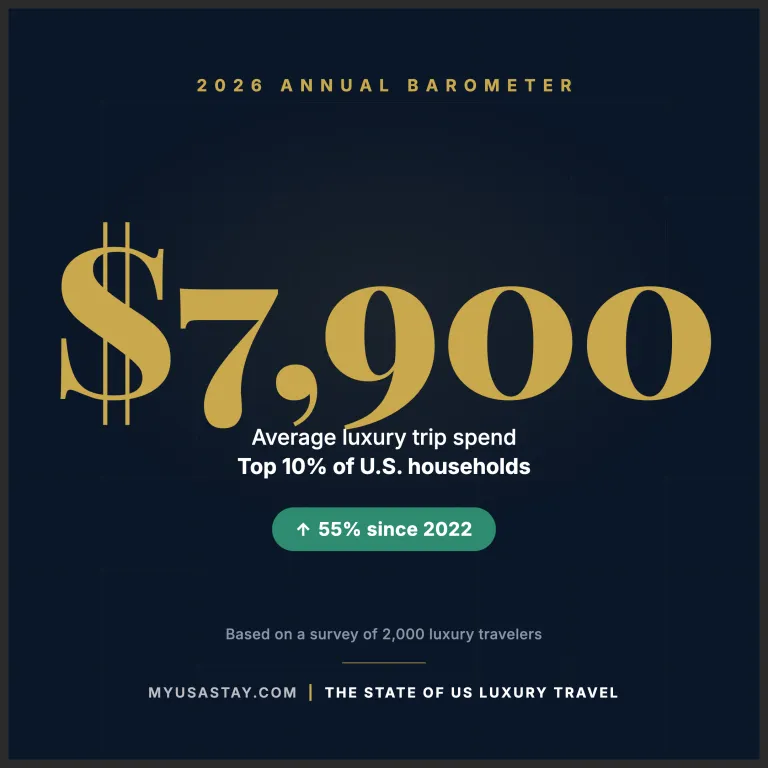
63% of American travelers are planning a domestic trip this summer. Social conversation about domestic vacations has doubled in the US. The shift is not about patriotism or cost savings alone. Higher-income households, who drive the majority of leisure travel spending, are choosing shorter, more frequent trips to US cities over longer international itineraries. Drive markets and city breaks are the primary beneficiaries. We analyzed spending patterns across 8 income brackets. The top 10% of US households now account for $544 billion in annual leisure travel, and the majority stays domestic. Families who once planned two-week international vacations are now taking four long weekends to explore different parts of the country. It is a fundamental change in how Americans use their time off.
Event-Driven Demand
The FIFA World Cup 2026 is the single largest demand driver in US travel this year. Eleven US host cities are seeing coordinated booking surges: New York, Los Angeles, Miami, Dallas, Houston, Atlanta, Seattle, Boston, Philadelphia, Kansas City, and the San Francisco Bay Area. But the World Cup is not acting alone. Universal's Epic Universe reshaped Orlando's tourism with 10 million first-year visitors. The Formula 1 Las Vegas Grand Prix has become an annual anchor event. SXSW continues to transform Austin. We mapped event-driven booking patterns across 22 major US events in 2026. The concentration of mega-events this year is historically unprecedented. Smart travelers check event calendars before planning to find either great energy or fewer crowds, depending on their preference.
Screen-Inspired Travel
53% of travelers say their desire for screen-inspired trips has grown. Among Gen Z and Millennials, 81% plan getaways based on destinations they have seen on screen. This is not a vague cultural trend. It is a measurable booking pattern. Cities and national parks featured in recent streaming content see search spikes within 48 hours of episode release. Glacier National Park, Yellowstone National Park, and the Grand Canyon all benefited from this effect. We tracked search correlations for 15 destinations featured in top-streaming titles. The correlation between screen exposure and booking intent is strongest for places with strong visual identity: national parks with stunning views of mountains, vibrant coastal towns, and destinations with small town charm that photograph perfectly for social sharing.
FAQ: Your Questions About US Travel Destinations
What is the most visited city in the US?
New York City leads in international visitors with 8.9 million in 2024 (NTTO data). For total visitors combining domestic and international travel, Orlando holds the record at 76.7 million in 2025, making it the most visited destination in the United States by raw volume. Both cities are among the best places to visit in the USA for very different reasons.
What US destination is growing the fastest in 2026?
Austin leads with a 423% surge in accommodation searches, the largest increase tracked across any US city. Among established major destinations, San Francisco flight searches grew 81% year-over-year. Both figures reflect summer 2026 booking data from leading travel platforms. If you are planning a trip and want to explore a city at the peak of its momentum, Austin is where to go right now.
How much do Americans spend on travel?
US travel spending is forecast to hit $1.37 trillion in 2026, with 87% of that total coming from domestic travel. The average international visitor to the United States spends $2,970 per trip. The top 10% of American households drive $544 billion in annual leisure travel spending. Family vacations account for a significant share, with families spending more per trip than solo travelers.
Which US cities are hosting the 2026 FIFA World Cup?
Eleven US cities will host matches: New York/New Jersey (MetLife Stadium, including the final), Los Angeles (SoFi Stadium), Miami, Dallas, Houston, Atlanta, Seattle, Boston/Foxborough, Philadelphia, Kansas City, and San Francisco/Bay Area. FIFA projects a $17 billion economic boost to the US economy and the creation of 185,000 jobs. The best time to find hotel deals near host venues is now, before the surge pricing takes full effect.